Choice

A lot of stress is caused by believing that we are hemmed into a corner in a particular situation and have no power over the outcome.

When we feel under pressure and the ‘fight or flight’ reflex kicks in, we can almost feel overwhelmed with a sense of panic that we are no longer in control of parts of our lives.

The feeling that we have no control over our situation is down to not recognising that we always have freedom of choice.

If we sit in silent contemplation for a time and allow ourselves to connect with our authentic selves and relax – we will notice that in reality we have many options open to us in any given situation.

We may not like all of the options open to us and, as with an options analysis for a prospective project, we may decide to take the ‘do nothing’ option.

But recognising that we do have options, however unpalatable some of them may appear to be, will immediately restore a sense of calm and being in control.

For, once we recognise that we have more than one option available to us, we then have a choice on which one we will take.

And when we have a choice, we have power.


Posted in Musings | Tagged , , , , , | Leave a comment

Internal

Everything starts with the internal.

It’s a very simple and elegant concept, but it can take us a lifetime to appreciate this.

From an early age, we are taught to view the pursuit of happiness as external to us and to seek fulfilment and reward in the external environment.

Concepts such as happiness, success, failure,  self worth, love – all are seen as being provided or attained through interacting with the external world of other people, society, work, politics, economics and religion.

This can lead to us feeling that we are victims of circumstance or the behaviour of others. People are either good to us or bad to us, we are lucky or unlucky.

We give reasons for not achieving something that are outside of our control: “well, she’s always had it in for me, so there was no way I was going to get that contract”.

Or even worse: “you make me feel bad about myself”.

By making ourselves into victims, we are not only placing the blame for our unhappiness or unfulfillment onto other people or external conditions – we are also giving away the power to do anything about it to the same people or external conditions.

Only when someone starts treating us right or fortune favours us can we truly live a life that we feel happy and supported in.

Whilst it may appear comforting in the short term to blame all our woes on external events and circumstances, it is actually completely dis-empowering.

If we are reliant on other people and events to bring us comfort in life, we are taking a huge risk with our happiness and sense of fulfilment.

But the truth is very different – and it is liberating.

Everything is internal. Whether we are happy or sad in life is entirely down to us.

Our perceptions shape our reality and we can change our perceptions in an instant. So it is possible to change our lives completely in an instant.

It is not easy, of course, but it is possible.

By being more mindful of what and how we are thinking, we can interrupt the unconscious programming that restricts us and learn to determine our own path.

Once we stop looking for external factors to make us happy, once we live with our own chosen set of beliefs and perceptions of how we wish to see the world – then we will begin to see more and more opportunities to enjoy whatever life has to offer.

By taking responsibility for our own happiness, we become captain of our own ship.


Posted in Musings | Tagged , , , , , | 2 Comments

Authentic

In business, social and personal interactions, trust is a vital element in establishing a healthy and lasting relationship.

Trust is built up over time and through consistency of action.

There are no short cuts to establishing real trust and maintaining it over long periods.

It is something that comes as a consequence of being authentic in word and deed.

It’s very easy to say the right things to people – to tell them what they want to hear. It is more difficult to back this up with consistency and authenticity in action.

Telling people what they want to hear is very common in management – many managers attempt to befriend their staff and will appear to say all the right things in order to gain their trust and respect.

However, unless this is backed up with actions that support the words, it is nothing more than a sleight of hand move – a managerial card trick for the benefit of an easy life for the manager.

We have all experienced supervisors and managers who appear to be ‘on our side’ when it suits them, blaming any unpleasantness on their superiors – ‘there’s nothing I can do, this comes from the top’.

But what makes a manager a leader is being able to manage up the chain of command as well as down it.

This means being true to a sense of fairness and principle in dealing with those they are managing and conveying accurate information back up to more senior managers.

A good manager becomes a leader when they learn to be authentic, when they inform other decision makers of the likely and real consequences of their decisions, rather than meekly implementing them.

Posted in Leadership | Tagged , , , , , | Leave a comment

Growth

For those who set out on the path of spiritual growth, there are a few thorny issues to contend with.

Perhaps the most obvious, but least recognised, is that growth is not easy – and indeed comes with a degree of pain and suffering that is essential for its achievement.

We cannot learn and grow if everything we do comes easily and brings us great joy.

Growth, by its very nature, is achieved through overcoming difficulties – whether they be internal or external – that we encounter on our path through life.

We learn how to deal with these difficulties and this enables us to better deal with them the next time that we encounter them.

If we see life as providing us with ‘opportunities for growth’, we are also aware that these are issues or problems that we either learn to deal with effectively or we face time and time again.

The spiritual path, if followed authentically, is not the soft option that many consider it to be.

It is not enough to buy a few crystals, wear a purple kaftan and chant 3 times a day.

It is about changing, internally more than externally – although external changes will be inevitable as we begin to lead a more authentic life.

Spiritual growth is about asking questions, seeking answers and being prepared to challenge ourselves and others.

This must be done with love – in fact, learning to give unconditional love is essential to the process, or it will not succeed – and must also be approached with dedication to truth and honesty.

Spiritual growth requires discipline, intelligence and humility and is not for those who are easily disillusioned or are seeking a quick fix to their current life issues.

In essence, all spiritual growth is concerned with learning the lessons of giving and receiving unconditional love – that spark of the divine in man that enables us to see the extraordinary in the ordinary.

Orb web


Posted in Philosophy | Tagged , , , , , | Leave a comment

Accept

The biggest underlying cause of stress is the refusal to accept that which we have no control over.

Whether it is what we see on the news, other people around us or time disappearing down the plughole, most of the world is beyond our ability to control it.

And yet we feel that we should be able to control everything around us.

We want our lives to be managed and ordered. We want things to fall into place and people to do what we have planned for them to do.

When this doesn’t happen, we get stressed. We feel that we are out of control and that our lives are unmanageable.

The only way to restore order and peace to our lives is to accept that we have no control over anything except our own thoughts and actions – and even those to a limited degree, as much of what we do is habit and unconscious action.

I have used the verb Accept as the title of this post, rather than the noun Acceptance for one specific reason.

Verbs are action words and I believe that in order to accept what is, we need to work at it.

It rarely comes naturally to us to accept the world and people around us without trying to exert some influence on them.

We learn to accept, rather than naturally be able to accept.

The learning process can be painful if we are trying to control others around us, or futile if we are trying to change the world from our arm chairs sat in front of the TV.

It is, however, one of life’s most important and rewarding lessons that we learn to accept that which we have no power to change.

Learning requires effort. We need to put effort into accepting the world and people around us.

We need strength to not go down the rabbit hole of chasing thoughts that are control centred.

We need to be at peace with ourselves in order to be able to accept things that rile us or that we think should be different.

Meditation is a good way of learning not to follow thoughts down the rabbit hole.

Over time, a regular meditation practice can help us to be more at peace with ourselves.

But it takes time to see results and is a process that never ends.

This is why I talk of effort – it is not easy to reprogramme ourselves to accept what we cannot change.

But if we can do it, it will bring us peace of mind and comfort, freeing us up to work on the things that we can have control over – our own thoughts and actions – and how we treat and relate to other people.

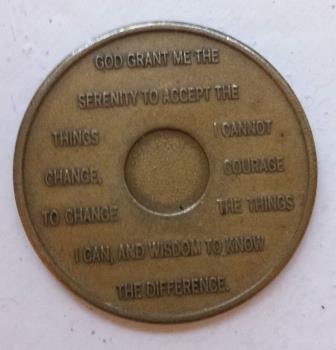
The Serenity Prayer

The Serenity Prayer


Posted in Philosophy | Tagged , , , , , | Leave a comment

Compassion

If we are to evolve further as a species, there are certain qualities that will need to be valued over others.

One such quality is compassion – the emotion that we feel when we witness the suffering of others.

Whereas empathy is the ability to recognise the emotions of others, compassion is the action that ensues from recognising suffering and wishing to alleviate it.

As such, it is an active quality, in that it makes us want to intervene in some way in order to reduce or prevent suffering.

This can manifest itself in the simple, yet impersonal act of giving money to charity – or it can find expression in someone giving their time and energy to another person in need of help.

However it finds expression, compassion is essential for the peaceful operation of human society.

Compassion can be viewed as the emotional embodiment of the Golden Rule  – do unto others as you would have them do unto you.

All of us will have benefited at some point in our lives from the compassionate actions of another fellow human.

We therefore have a responsibility to do the same for others when we have the opportunity.

In The Art of Happiness, the Dalai Lama says:

Love and compassion are necessities, not luxuries. Without them, humanity cannot survive.

It is essential that we demand it of our leaders and teachers.

And as parents, aunts, uncles, grandparents, we have a huge responsibility in teaching our young the values of compassion, kindness and altruism.

Recent studies have shown that, whilst there is a region of the brain that is dedicated to the expression of compassion, it is generally through learning (by following the example of others) that the quality itself is developed in our behaviour.

We therefore all have within us the capacity to make the world a better place. It is our responsibility to ensure that this capacity is developed and nurtured.

Learning and teaching compassion can be an act of conscious creation for a more evolved human race.

Posted in Culture | Tagged , , , , , | Leave a comment

Honesty

Above all else, the need for honesty in any relationship is paramount.

Without honesty, the relationship is doomed either to fail or to reach a point and then stagnate.

And it isn’t easy to be totally honest with anyone.

We don’t like to let others know that we have fears, that we lack confidence in certain areas, that we haven’t always done the right thing by others in life.

There could be a million reasons why we would hold back the whole truth from our loved ones.

But this is inherently a selfish act and is born out of self-preservation – or preservation of the image of the self that we wish others to perceive.

Unconditional love requires us to set aside our own wishes and desires and to consciously consider the needs of the other (partner, spouse, friend).

When we speak of honesty, we include being truthful about our feelings.

“Leave nothing left unsaid” should be the motto for anyone embarking on, or engaged in, a relationship with another human.

If you have strong feelings for someone, you need to tell them and then step back and allow them to digest and assimilate the information and make their own minds up.

We do not mean that we bombard the other with protestation of undying love, badgering them into submission until finally we win our prize.

That is ‘conditional’ love. You love someone on condition that they love you back.

Unconditional love is more spiritual. It springs from the divine and is an expression of true understanding of the needs of the other.


Posted in Honesty | Tagged , , , , | Leave a comment

Protection

Sometimes our instinct to protect our loved ones from pain or suffering in life can be counter productive.

Our eagerness to protect can smother them and prevent them from learning the lessons that they need to learn to protect themselves in the future.

For we can’t always be there when things get difficult for them. We can’t protect anyone from every harsh word, inconsiderate act or bully that they will encounter in their life.

They need to develop and practise the skills and confidence that will enable them to protect themselves.

Often, the most loving thing we can do is to allow them the space to work things out for themselves, whilst making sure that they know that we are here for them if needed.


Posted in Uncategorized | Tagged , | 1 Comment

Forgive

One of the most difficult lessons we learn in life is that we cannot hold on to anger, resentment and negative feelings without causing ourselves harm.

It is important for our own health and peace of mind that we are able to forgive real and perceived wrongs that have been perpetrated upon us.

It is almost counter intuitive to forgive someone who has slighted, wronged or caused us harm. We may not only wish to see them punished for their wrongdoing, but we may continually think of ways of making them suffer for what they have done to us.

However, holding on to anger and the need to make others suffer or to wish them harm only causes us a greater harm in the long run.

Resentment is like drinking poison and then hoping it will kill your enemies.

Nelson Mandela

Remembering and recounting how someone has wronged us brings the emotions associated with the wrong back. So, even though the event itself is in the past, the emotions and feelings associated with it are kept in the present.

Anger is an emotion that has a very specific purpose – to help us to survive in a life and death situation by flooding the body with adrenaline and cortisol, speeding up the heart, pumping blood to the larger muscles and directing it away from the digestive system.

Our body is being prepared to defend itself against a real threat. But in the modern world, these life and death situations occur relatively infrequently. Yet, we still get angry, have resentment and suppressed rage towards others and therefore still experience the same release of stress hormones into the body.

Over time, these hormones and the effects they have on our bodies can lead to long term health issues, including stress related illnesses, heart and cardiovascular system issues.

They also have a direct impact on our psyche and attitudes to the world at large. If we are someone who holds onto resentment, we will find plenty of things to resent and that make us angry.

Hatred hurts the hater. Anger, resentment and suppressed rage are ultimately self destructive if not dealt with.

Forgiveness is therefore important for our health and well being. The sooner we can forgive, the less chance there is for it to begin to have a debilitating effect on our health.

This is also why it is essential for us to learn to forgive ourselves. Anger, resentment, guilt, self hatred turned inwards will cause us great suffering over time – physical, emotional and spiritual.

It is perhaps more difficult for some of us to forgive ourselves than it is to forgive others – but it is no less important an act for our long term health.

Forgiving others the wrongs they have  done to us is not the same as condoning or pardoning their actions. It is a letting go inside of us, so that we do not carry it with us through life and can move on in peace.

Having a regular meditation practice can help with the release of negative emotions such as anger and resentment, as we learn to control or be aware of the thoughts in our mind.

This can be as simple as sitting in silence for 20 minutes a day and watching our thoughts arise and subside, without following them or hanging on to them.

Thoughts create emotions as they pass through our mind – and if we are aware of our negative thoughts, we can release them before they have the chance to take root and do us harm.

Awareness brings choice – we can notice the negative thought patterns, the unresolved anger, the resentment – and choose to let them go, for our own good.

By learning to forgive (both ourselves and others) we become stronger, we move away from being one of life’s victims to living a more peaceful and healthy existence.

The weak can never forgive. Forgiveness is the attribute of the strong.

Mahatma Gandhi

Posted in Philosophy | Tagged , , , , , , , | Leave a comment

Moment

Life is change – it is never static.

No matter how much we may want things to remain the same, they never are. Every moment is different from the one before and will be different from the one to follow.

This can be frustrating if we are trying to hold onto things.

We can feel that life is slipping through our fingers, that we cannot control what is happening, that we are helpless victims of circumstance.

But we are not victims, we are creators.

We are where we are in life because of the choices we have made along the way. We may not feel that we have always had a choice, but if we look closely we will see that we did.

Even not taking action and allowing things to happen to us is a choice.

Because we are creators, we have a responsibility to ourselves to create the environment, perceptions and thoughts that support us through life.

It is very easy to slip into habits that are not supportive – we give our power away to others far too easily by holding on to negative emotions like fear, guilt and resentment.

But we have power. At any single moment we can change the course of our life.

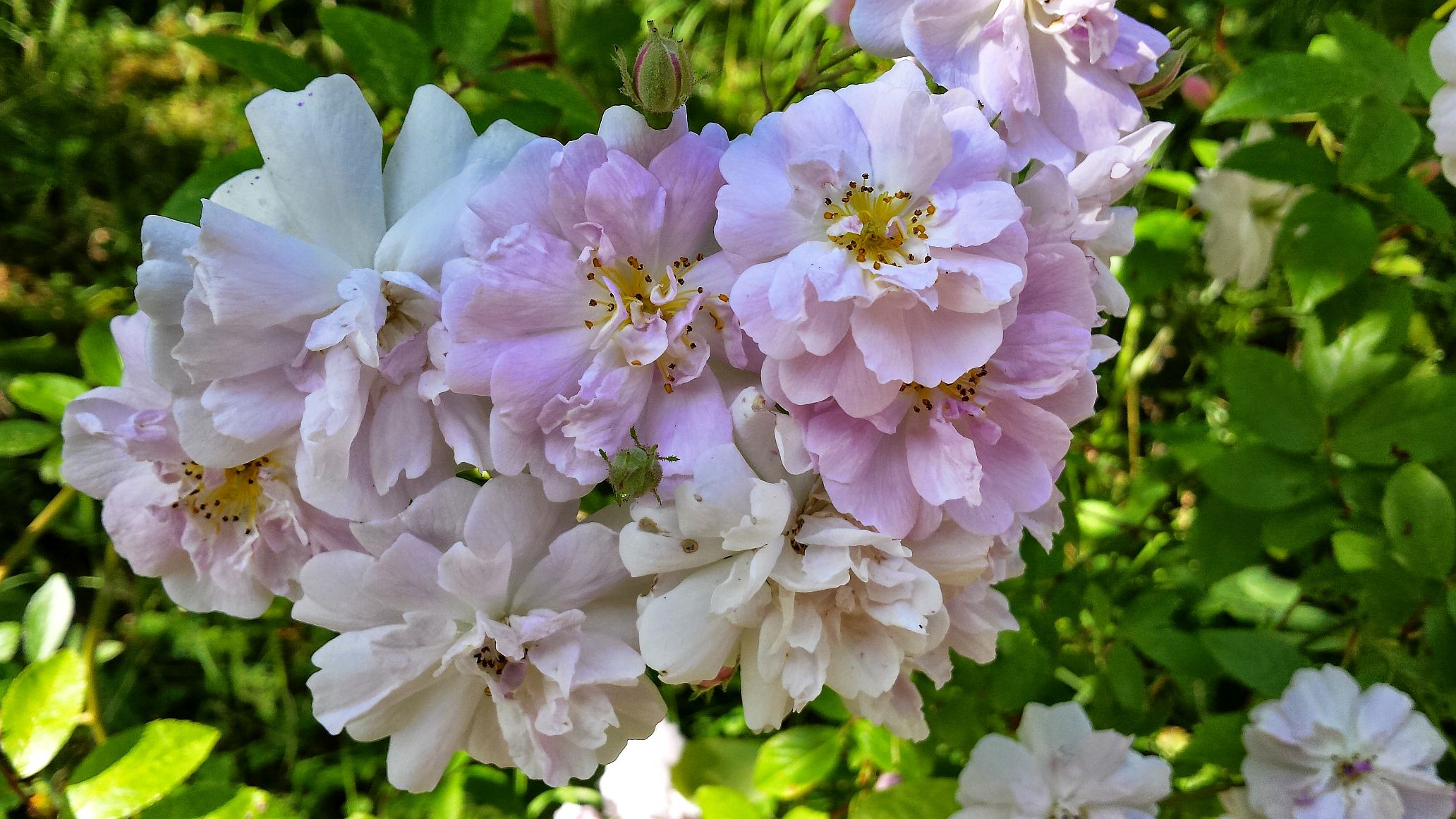
We can choose a different path.Wild roses

It starts with a decision to change how we think. Right now.

If we don’t like something in our life, we can change it by changing the way we think about it. The inner world precedes the outer. Our thoughts create our experiences.

And it is in the eternal present moment that we have the power to determine how we will live our lives.


Posted in Philosophy | Tagged , , , , , , | 1 Comment