
Rabbits

Anyone who has a dog and walks her in the countryside will be aware that this time of year is particularly frustrating for your dog.

Everywhere they turn, there are little white tails bouncing across the ruts, disappearing down a hole just a few seconds before a happy faced pooch suddenly pulls up short in disappointment.

I have a greyhound called Daisy, who has an incredibly strong chase reflex. If allowed to, she would chase all day or until her heart or lungs stopped.

It’s programmed into her, hardwired to force her to constantly chase the rabbits. Chase every one she sees, running it down until it disappears down a hole.

When it is in the hole, she still has no peace. She will stand to attention, waiting for it to come back.

20140227_072636

Daisy the greyhound – ‘look, a rabbit’

But then another movement will catch her attention elsewhere in the field and she’d be off again.

Chasing the rabbit, unable to  catch them all, destined to be eternally frustrated.

Daisy’s frustration with the rabbits is mirrored in our own search for peace and contentment.

We don’t chase rabbits. We could, but we know we won’t get anywhere near them.

We chase our thoughts, though.

They rise unbidden from who knows where and scurry across the fields of our consciousness, grabbing our attention as they go.

We follow them, chasing every one – but before we can catch it and devour it, it’s gone.

We sit and watch, hoping that we will be given another chance to catch its meaning. Then suddenly another thought pops up and we repeat the process.

When we meditate, we learn to stop chasing the rabbits.

We can’t stop the rabbits coming up and running in front of our conscious mind.

But we learn to let them go. We don’t give chase. We accept that the rabbits will come and go, but we know we don’t need to follow them.

We let them run, we watch them disappear down their holes. We smile to ourselves, but we don’t give chase.

We calmly sit, free from their influence and in peace.
Posted in Musings | Tagged , , , , , , , | Leave a comment

The Love Rules

Welcome to Love Rules.

The purpose of this site is to design a set of “love rules” to help create lasting and equitable relationships based on the principle of unconditional love.

Unconditional love is the highest form of love, often thought of as genuine affection without any limitations.

But how is it manifested in reality?

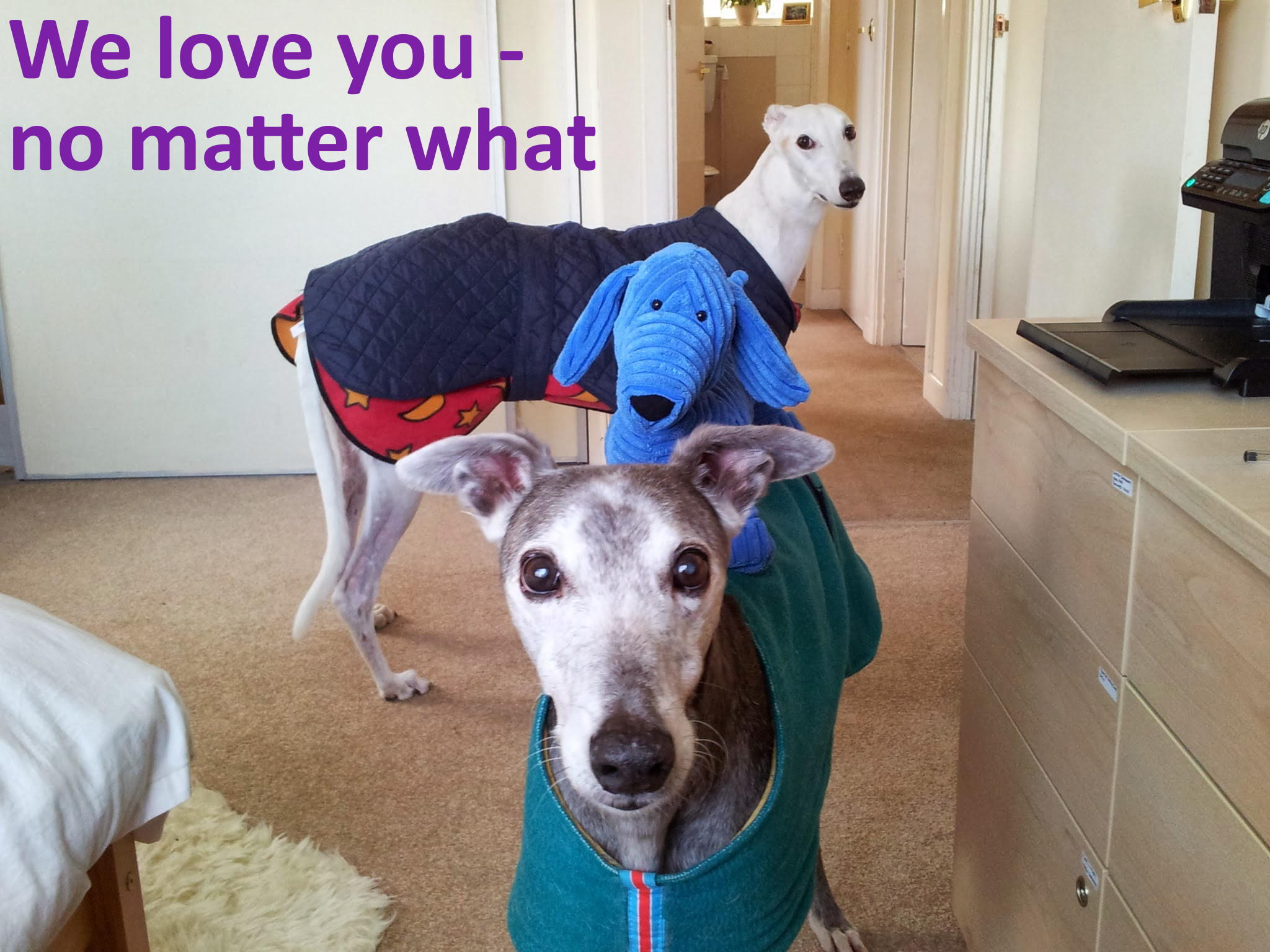
Dog love is unconditional

Pet love is unconditional

We explore how we can give and receive unconditional love and what this means to us in our every day relationships.

We will also build a list of our favourite expressions of unconditional love – we call them the Love Rules.

Why not join the discussion, giving us examples of how you have either shown or received unconditional love. What does it mean for you and your relationships?


Posted in Intoduction | Tagged , , , , | Leave a comment

Water

Leaders would do well to consider the properties of water and attempt to imbue themselves with some of these qualities.

Water can take many forms, depending on the circumstances it finds itself in. It cannot be destroyed: it merely changes from one state to another.

If it gets too cold, water contracts and becomes ice, getting harder as the temperature drops. It gathers its molecules together and compacts, interlocking and resistant.

As the conditions become more favourable, it is ready to expand again and flows once more when the temperature has risen sufficiently.

When it gets too hot, water evaporates into steam and becomes so light it can rise above the furnace and drift away.

20140329_082453

River Parrett, Somerset, England

When it reaches cooler air, it brings itself back together again and condenses into droplets, which can then fall back down to earth.

The droplets join together and form streams, then rivers which finally flow back into the sea (which is the source).

Lao Tzu said of water:

“Nothing in the world

is as soft and yielding as water.

Yet for dissolving the hard and inflexible

nothing can surpass it”

Tao Te Ching, Lao Tzu

For me, this speaks to the very heart of what it is to be a great leader. Being adaptable, soft and yielding is not a sign of weakness.

It is a measure of great strength and power.

Posted in Musings | Tagged , , , , , , | Leave a comment

Paths

20140405_132552

Whilst out running recently, I was greeted by the sight of the stile above. It stands alone in a secluded woodland and is not connected to any fences, hedges, wires or other barriers.

I have run this route many times before and not really noticed this anomaly. I have passed it and looked, but this time I stopped and stared.

Why is it here? What possible use does it have or purpose can it serve?

The more I thought about it, the odder it became. Who would put it up in the first place? Did it ever serve a purpose or was it always disconnected from everything around it?

Was it a joke, a modern art piece? Were there hidden cameras around to capture the confusion of folks like me who stumbled upon it?

Looking around further, I realised that it was positioned at the intersection of 3 paths: a wide path at the top and two smaller ones coming down off the top one and diverging beyond the stile.

Was this the point of it? Did it mark a point where the journey has a number of different options that will inevitably take one to very different destinations?

I had a feeling that this moment was important to me in some way, so I took the photo and moved on a few steps on my original path.

Then, on impulse, I turned around, went back up to the stile and climbed over it: first one way and then back again, jumping off into the mud with a splash.

It felt good and I continued on my way with a smile, knowing that I had learnt something important: there are times when the rational mind cannot give us an answer to our questions, for there is no answer to be found – we just have to enjoy the moment and then move on.

Posted in Musings | Tagged , , , , , , , , | Leave a comment

Creation

A good friend asked me once: ‘What have you created today?’

It stopped me in my tracks a little at the time. I answered without thinking: ‘I have created space’.

I wasn’t sure at the time what I meant by that – it just felt like the right answer for me in that moment. I was going through a very hectic time and had made a few decisions that allowed me space to think about what was important to me.

But the question has remained with me to this day. I think about it every day. Initially, this was at the end of the day, when I would look back and ask it.DSC_0014

Now, I ask it at the start of the day in a slightly different way: ‘What will you create today?’ This makes the process more conscious and is great for focusing my mind on what it is that I want to achieve each day.

And this is not just about work. This is about everything in life – relationships, surroundings, moods, art, play, work, society.

For we are all creating in everything that we feel, think, speak and do. Every moment we create – the only question is whether we do that consciously or unconsciously.

It’s not just about painting, writing or making music. Creation is the external expression of who we are inside – this may work its way out in the form of a painting. But it could equally be a house, business report, meal or something less tangible – such as an ambiance in a room or home.

When we are unaware of how our feelings and thoughts will find expression in the life we create around us, we can find ourselves with chaotic or painful lives if we are not careful.

And this affects everyone around us. Couples can create homes that are filled with love and laughter or pain and bitterness.

We often don’t realise that we are doing this and that we actually have the power within ourselves to create a different reality. By consciously deciding to create that which supports and nourishes us, we can change even the most unhealthy of situations for the better.

We are all creators and each have a responsibility to ask ourselves: ‘What will I create today?’


Posted in Musings | Tagged , , | 1 Comment

Place

There is a bridge over a small river a couple of miles from where I live in Somerset. It is one of my favourite places to visit.

It’s nothing spectacular. Pretty ordinary really. You probably wouldn’t take much notice of it if you drove over it or walked up to it.20140329_082446

The river itself is nothing to write home about either.

And yet when I am there, something inside is touched by a knowing that there is a greater purpose to life. That we are more than just blood and bones.

That whilst we are here, for however long or briefly that may be, there is something important that we need to achieve. We may not be consciously aware of what that something is and many of us will deny that such a thing is possible.

But when we sit in a place that allows us to be quiet and peaceful, away from the distractions of modern life, we can connect again with that inner voice that tells us whether we are on the right path or not.

It is important for us as humans to recognise that we could have a ‘mission’ in life. It can give us the drive and determination to succeed in what we attempt.

By feeling that we are fulfilling a destiny or greater purpose, we can lift ourselves and those around us out of the ordinary and into the extraordinary.

It can keep us going when we feel that we are drained or lacking in energy, when success feels a long way out of reach.

By going somewhere quiet and peaceful and re-connecting with our sense of purpose, we are refreshed and motivated to carry on when times are hard.

This bridge is my place. It helps.


Posted in Musings | Tagged , , , | Leave a comment

Koan

Problem solving skills are highly sought after in both the academic and business worlds.20140401_201616

Institutions such as schools and universities teach them as a core part of many courses and structured training.

Leaders are expected to demonstrate good problem solving skills if they want to be taken seriously in the business world.

There are a number of stages to solving problems, including: identifying and structuring the problem; assembling potential solutions; making a decision on which solution to choose; and finally implementation and seeking feedback.

The stage that most stands out here is: making a decision on which solution to choose.

Despite carefully and systematically identifying, structuring, assembling, implementing and seeking feedback, the main element of this process is a human making a decision on which solution to choose.

And if a human is involved in making a decision, that decision will rarely be a purely teachable, logical one.

Humans are complex and often irrational creatures with potentially a multitude of opposing and contradictory emotions existing at the same time.

These will all have a subtle influence on the decision being made. And the person making that decision will probably not even be aware.

The logical mind can get trapped within itself and fail to see what may be staring it in the face.

Eventually the great problem solving leader will need to rely on something else, something more fundamental and less structured.

In the Zen tradition, the Koan is used to break through the logical mind and provide a short sharp slap to the student’s intuitive mind.

A Koan is a paradox to be meditated upon by the student in order to abandon dependence on reason alone.20140330_101612

An example often quoted is the “sound of one hand clapping”. Reason dictates that this is impossible and the Buddhist is forced to find another way to understand the meaning.

This is the beginning of intuition. Or, seeing a problem from a perspective outside of reason.

If we are to deal with some of the increasingly complex problems that the world is facing, we can’t rely entirely on reason and logic to solve them.

We  need to develop leaders that are able to access their intuition.

It can’t be taught. But it can be nurtured.

Put the kettle on.


Posted in Musings | Tagged , , , | Leave a comment

Sparkle

It is easy to get mentally trapped into steering a steady course through life.

Life is not a smooth ride and there are many slips and trips to be had. It is natural to want to avoid these painful episodes as much as possible.

But each fall, each stumble along the way, adds to our sense of balance and enables us to cope with trickier terrain next time.

Whenever it gets difficult, we shouldn’t retreat to the shadows and let life pass us by.

We should paint ourselves with glitter, burst out into the sun – and sparkle.

20140330_101539

What makes you sparkle?


Posted in Musings | Tagged , | Leave a comment

Haiku

There is a special form of Japanese poetry called the Haiku. It’s format is 3 lines, containing 17 syllables – 5 in the first line, 7 in the second and 5 in the third.

20140328_143030With such a rigid and ordered structure, one could be forgiven for thinking that the poems would be sterile, lacking in enjoyment – and soulless.

However, Haiku poems were not initially intended for instruction, but as vehicles for inspiring deep enjoyment of sentiments or knowledge.

There is usually a reference to nature and the strict form of the poem encourages all waste to be cut out.

Only the words that really matter are included in a Haiku poem.

”Everything I touch20140328_143122

with tenderness, alas,

pricks like a bramble.”

Koboyashi Issa, c1800

The ancients used the poems to reach a state of intuition and insight by repeating them over and over again.

So, why write about the Haiku in 2014?

Because it has much to teach us about how we live our lives and do business.

There is: structure, rule, hierarchy, tradition, order and symmetry.

There is also: beauty, insight, intuition, knowledge, no waste and a shared appreciation of nature.

They can all exist together – but it requires practice, dedication and discipline to succeed.


Posted in Musings | Tagged , , , , | Leave a comment

Sandals

Many great lines have been written to help us, but my personal favourites are the four lines at the end of verse 36 of the Tao Te Ching by Lao Tzu:

‘The soft overcomes the hard.

The slow overcomes the fast.

Let your workings remain a mystery.

Just show people the results.’

These four simple lines have helped me through some difficult times.

There is much wisdom contained in these lines and it is well worth learning them and thinking about them when you have some quiet time.Peace

The first line helps me to deal with confrontational situations – you cannot diffuse anger by being angry yourself. Patience and understanding will always win out in the end.

The second line teaches me that life is not a race, it is a journey. If we go too fast, we will miss something beautiful or important to us. It is good to be still often.

The third line I see as avoiding bragging and making  loud claims for yourself. Humility is important and, if you are good at what you do, people will see that anyway. If you are always talking about yourself, how will you learn anything from anyone else?

Which leads to the final line. Be patient, in the knowledge that if you create with the right attitude, the results will speak for themselves.

I often smile to myself and wonder how Lao Tzu may have summed up his masterpiece. I’d like to think it would be something along the lines of:

‘simple words from an old man in sandals’

Laurel and Hardy with monkey

Posted in Musings | Tagged , , | Leave a comment